
- News
- City News
- bengaluru News
- After a week of rain, Bengaluru sweats due to heat-island effect
Trending
This story is from May 18, 2023
After a week of rain, Bengaluru sweats due to heat-island effect
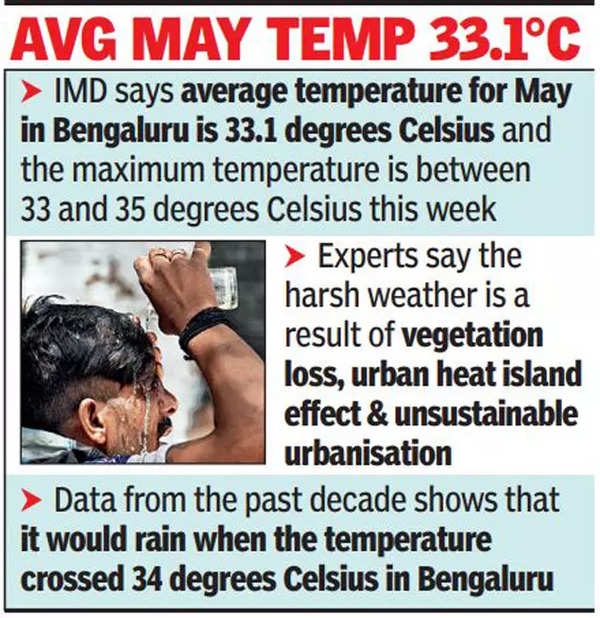
After a week of evening showers early May, the weather has regained sizzle in Bengaluru, with Indian Meteorological Department pegging the average temperature for May - based on figures from 1990 to 2020 - at 33.1 degrees Celsius. The maximum temperature is between 33 and 35 degrees this week, but the weatherman says a two-degree deviation is not abnormal.

Representative image
The merciless weather is a result of vegetation loss, urban heat island effect and unsustainable urbanisation. MN Thimmegowda, who heads agricultural meteorology at Gandhi Krishi Vigyan Kendra, said, "Tree cover and biodiversity are decreasing by the year. Due to cutting of trees, the heat that used to be trapped by the plant system is reaching us directly. Buildings dominate the landscape, and they warm up faster and re-radiate heat. Walls in the house feel warmer than the air outside. Ditto with the tarred roads, which also trap a lot of heat."
The expert recalled that he used to walk 8km to school decades ago, but would never sweat.
The thought of walking even 500 metres feels difficult due to the weather," he said, adding even when temperatures touched the 35-degree mark some years ago, they never felt the heat as they do now.
Jagdish Krishnaswamy, dean of environment and sustainability at Indian Institute of Human Settlement, said cities suffer from urban heat island effect due to massive concretisation. "This acts as a double blow along with effects of global warming," he said. The expert said 'wet-bulb temperature' of 35 degrees C is almost intolerable for humans, and high discomfort can be felt at wet-bulb temperatures above 32 degrees C.
Why no rain now?
Datasets from the past decade show when Bengaluru crossed 34 degrees C, it would rain. "In the past 5-6 years, even if the temperature goes up to 35-36 degrees C, we are not likely to experience that kind of rain. This is due to distribution of rainfall being regulated by atmospheric pressure that depends on water transpired by plant system. When vegetation has declined, transpiration is less and the vapour-pressure gradient is not created to bring rain. That's why we don't get rain," said Thimmegowda, head of agricultural meteorology, Gandhi Krishi Vigyan Kendra.
Stay updated with the latest news on Times of India. Don't miss daily games like Crossword, Sudoku, and Mini Crossword.
End of Article
FOLLOW US ON SOCIAL MEDIA










Photostories

Hot Picks
TOP TRENDING
Explore Every Corner
Across The Globe
Popular Categories
Hot on the Web
Top Trends
Syrian Civil WarShaunie HendersonWho is Sanjay MalhotraIndian Cricket Team FanMilwaukee Bucks vs Brooklyn NetsWho is Luigi MangioneWTC Final Qualification ScenarioIPL 2025 Full Teams SquadRCB Team SquadDiljit Dosanjh Indore ConcertMike TysonHow to Apply Pan 2.0Kamlesh NagarkotiMumbai Bus AccidentMohammed SirajHarbhajan SinghUPSC Mains ResultLive Cricket Score
Trending Topics
Pushpa 2 America Box Office CollectionPushpa 2 ReviewAbhishek BachchanRubina DilaikBhool Bhulaiyaa 3 OTTViral NewsAmitabh Bachchan HouseOptical illusionSandeep Reddy VangaMukesh Ambani's Favorite FoodSnowfall in KashmirZodiac SignsHair RegrowSkincare Tips for WinterWeight Loss TipsHair FallMicrosoft 365 OutageNarayana MurthyElon Musk
Living and entertainment
Latest News
Ben Affleck has no plans for a new relationship after split from Jennifer Lopez'Luigi Mangione meticulously planned perfect crime, but ... ': What the UnitedHealthcare CEO killer got right — and fatally wrongHow enterprises benefit from startup agility & innovationPakistan pacer Shaheen Afridi scripts history, becomes first ...Yellowstone Season 5 finale: When and where to watch Episode 14AI safety isn’t just about preventing a ‘rogue AI’Aaron Taylor-Johnson's 'Kraven the Hunter' faces underwhelming box office projections as makers reboots Spider-Man strategyMalibu Franklin fire: Beyonce and Jay-Z, Jennifer Aniston and other celeb homes at risk of burning down in wildfire'Sorry, KL Rahul, not Rahul Dravid': Sunil Gavaskar's quick fix for Matthew Hayden's blunderBiden regrets leaving name off pandemic relief checks like Trump did, says he was 'stupid'Making a $1 billion investment in US? Trump promises fast-track permits — but there are hurdlesDid Luigi Mangione’s assassin video game past hint at the CEO Brian Thompson's murder? ‘Extremely ironic,’ says friend‘Sookshmadarshini’ box office collections day 19: Nazriya’s mystery film mints Rs 50.2 crores2nd ODI: Brandon King, Jayden Seales shine as West Indies cruise past Bangladesh'We will respond forcefully': Netanyahu warns Syria's new regime against hosting Iran or arming HezbollahMegan Fox and Machine Gun Kelly split just a week after pregnancy announcement: Report'Pushpa 2' box office collection Day 6 (updated live): Allu Arjun and Rashmika Mandanna starrer records fastest Rs 1000 crore gross in Indian cinemaTrump names Andrew Ferguson as Federal Trade Commission Chair, pledges antitrust focus on censorship
Copyright © 2024 Bennett, Coleman & Co. Ltd. All rights reserved. For reprint rights: Times Syndication Service